

.jpg)

.jpg)
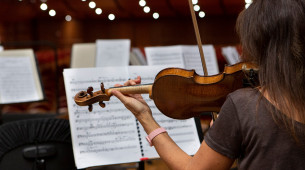

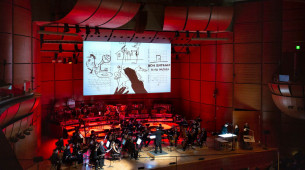
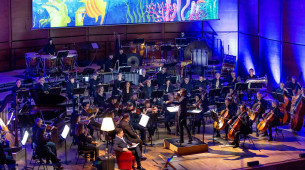
.jpg)
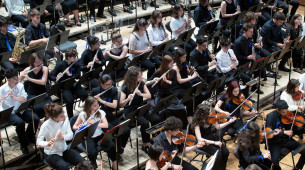
.jpg)
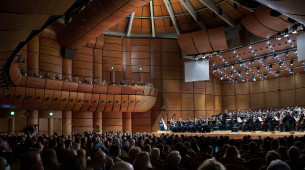
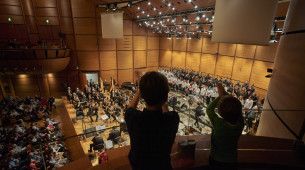
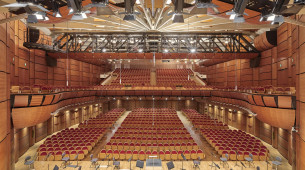
 Auditorium of Milan


“
At the moment there are two great nations in the world, the Russians and the Americans.
Their starting point is different and their routes are not the same, yet each of them seems marked by the will of Heaven to influence the destinies of half the globe
Their starting point is different and their routes are not the same, yet each of them seems marked by the will of Heaven to influence the destinies of half the globe
”
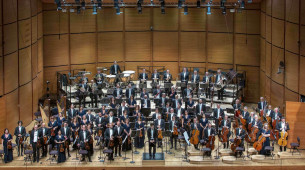
More than a century before the Cold War, Alexis de Tocqueville expressed himself in this way by observing the two great powers that would be destined to mark post-modern history during the second half of the twentieth century. But music is something else, it never stops. Even when war forces humanity into pain, it continues to proliferate, sometimes concealing messages that attempt to convince people to approach history with the right attitude, as in the case of Bernstein's Candide, a clear denunciation of the passive acceptance of events and the renunciation of the use of reason in the name of prejudice and superstition, sometimes clashing violently against the historical-political circumstances that would like to cage art in an ideology, as is the case with Shostakovich's Fifth Symphony, a consequence of the rejection of his Lady Macbeth of the Mtsensk district by Joseph Stalin.