


.jpg)

.jpg)

.jpg)
.jpg)
@ sinfonicami


How to contact us
Ticket office: Largo Gustav Mahler, Milan
La biglietteria è aperta da martedì a domenica, dalle 12.00 alle 19.00
T. 02 83389.401
[email protected]
 Auditorium of Milan
Largo Mahler,
Milan
M.A.C
Piazza Tito Lucrezio Caro, 1
Milan
© Fondazione Orchestra Sinfonica e Coro Sinfonico di Milano Giuseppe Verdi
Piazza Tito Lucrezio Caro, 1 - Milan
Tax Code 97119590152 - VAT number 11024950153

What is meant by "musical form"? It is a matter of substance—the stylistic shaping of content from which the form cannot be separated.
While some musical forms may rely on a "paternal" authority that codified them—such as the symphony or sonata form in the case of Joseph Haydn—others, like the rondo or the canzone, require tracing their origins and evolution back to the medieval or Renaissance periods. This journey extends all the way to the twentieth century, a time when forms were dismantled, redefined, and challenged—as seen in Erik Satie’s Three Pieces in the Form of a Pear.
But what exactly are the rondo and the minuet? What is a concerto? What defines a madrigal? And finally, where does the boundary lie between form and genre?
Led by Professor Bianca De Mario and spanning seven sessions between December and February, this course aims to provide a foundation for understanding key concepts in music history through guided listening and an exploration of some of classical music’s most celebrated works.
While some musical forms may rely on a "paternal" authority that codified them—such as the symphony or sonata form in the case of Joseph Haydn—others, like the rondo or the canzone, require tracing their origins and evolution back to the medieval or Renaissance periods. This journey extends all the way to the twentieth century, a time when forms were dismantled, redefined, and challenged—as seen in Erik Satie’s Three Pieces in the Form of a Pear.
But what exactly are the rondo and the minuet? What is a concerto? What defines a madrigal? And finally, where does the boundary lie between form and genre?
Led by Professor Bianca De Mario and spanning seven sessions between December and February, this course aims to provide a foundation for understanding key concepts in music history through guided listening and an exploration of some of classical music’s most celebrated works.
- 1. Course introduction and initial examples (Wednesday, December 3, 2025)
- 2.
Rondò, Minuetto and Suite
(Wednesday, December 10, 2025)
- 3.
The Concert (Wednesday, December 17, 2025)
- 4.
The Sonata (Wednesday, January 7, 2026)
- 5.
The Canon and the Fugue (
Wednesday, January 14, 2026)
- 6.
Madrigals and Songs (Wednesday, January 28, 2026)
- 7. The Lied and the Aria (Wednesday, February 11, 2026)
From December 3, 2025, to February 11, 2026
Seven sessions of 90 minutes each – from 5:00 PM to 6:30 PM
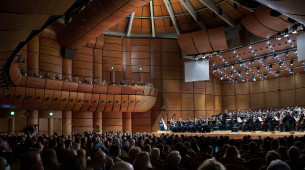
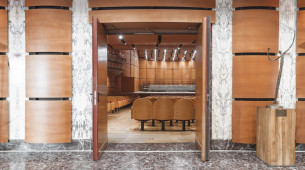
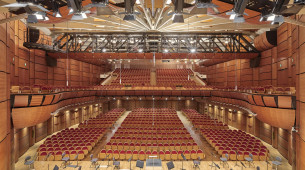
at the Foyer Gallery of the Milan Auditorium
To further enrich the experience, a package of five concerts from the Orchestra Sinfonica di Milano's 2025/26 Season (running from January to May 2026) can be added to the course, fostering a more informed and engaged listening experience.
REGISTRATION FEES
COURSE: € 90
CORSO + 5 CONCERT PASS: € 200
UNDER-35: COURSE € 50
at the Foyer Gallery of the Milan Auditorium
To further enrich the experience, a package of five concerts from the Orchestra Sinfonica di Milano's 2025/26 Season (running from January to May 2026) can be added to the course, fostering a more informed and engaged listening experience.
REGISTRATION FEES
COURSE: € 90
CORSO + 5 CONCERT PASS: € 200
UNDER-35: COURSE € 50
GIFT MUSIC
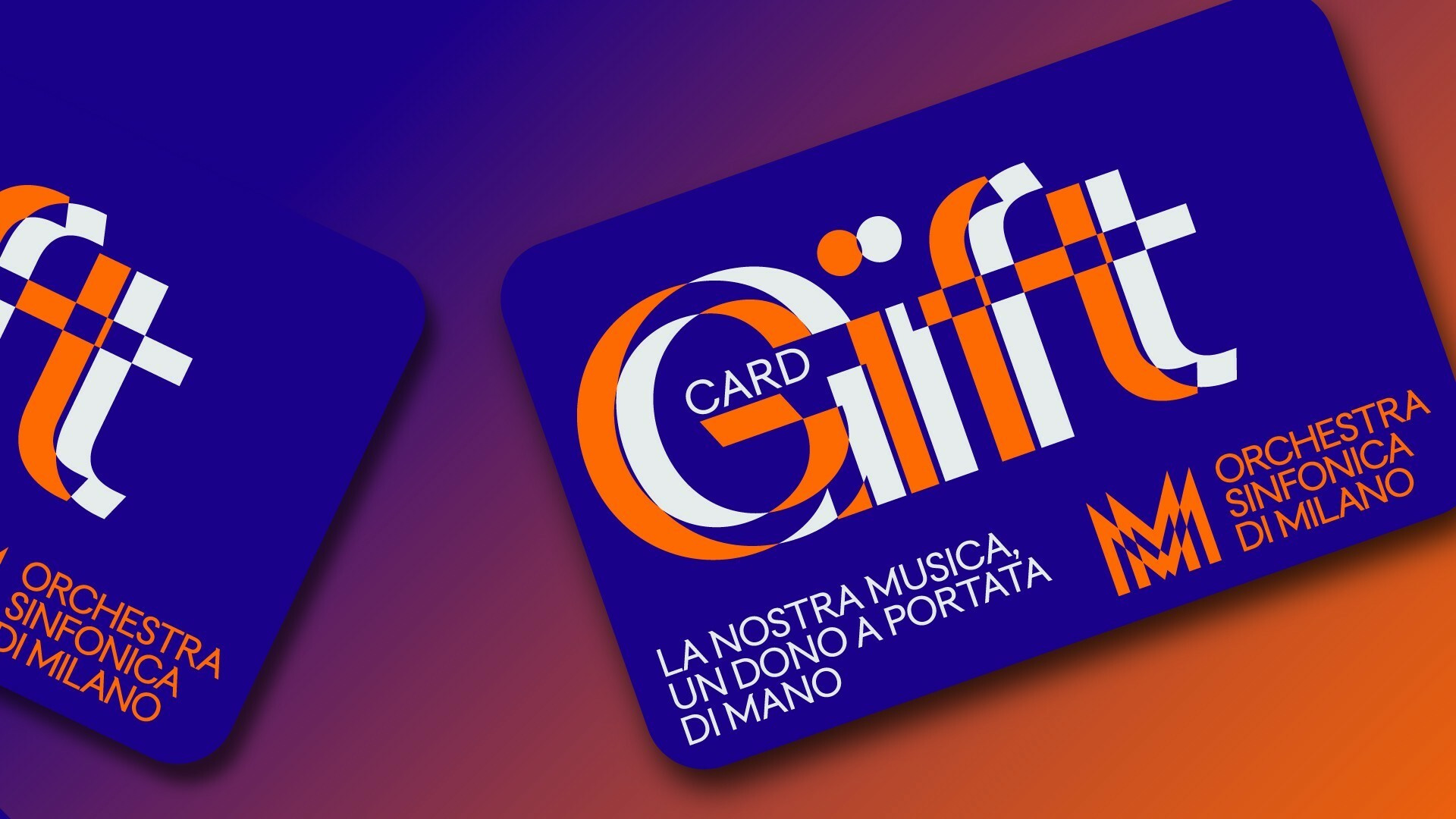
GIVE THE GIFT OF MUSIC WITH THE ORCHESTRA SINFONICA DI MILANO
GIFT CARD
GIFT CARD
Looking for a special gift for a music lover?
With the Orchestra Sinfonica di Milano Gift Card, you can give them the thrill of a live concert or a subscription to the 2026/27 Season!
FIND OUT MOREWith the Orchestra Sinfonica di Milano Gift Card, you can give them the thrill of a live concert or a subscription to the 2026/27 Season!
Vuoi restare aggiornato sulle nostre attività?
Iscriviti alla newsletter!
@ sinfonicami
With the contribution of

Institutional Founders


Founders Promoters





With the support of

Partner


Technical sponsors



Media Partner




Digital Partner

How to contact us
Ticket office: Largo Gustav Mahler, Milan
La biglietteria è aperta da martedì a domenica, dalle 12.00 alle 19.00
T. 02 83389.401
[email protected]
Ticket office: Largo Gustav Mahler, Milan
La biglietteria è aperta da martedì a domenica, dalle 12.00 alle 19.00
T. 02 83389.401
[email protected]
Auditorium of Milan
Largo Mahler
Milan
Largo Mahler
Milan
M.A.C.
Piazza Tito Lucrezio Caro 1
Milan
Piazza Tito Lucrezio Caro 1
Milan
© Fondazione Orchestra Sinfonica e Coro Sinfonico di Milano Giuseppe Verdi
Piazza Tito Lucrezio Caro, 1 - Milan
Tax Code 97119590152 - VAT number 11024950153
Piazza Tito Lucrezio Caro, 1 - Milan
Tax Code 97119590152 - VAT number 11024950153